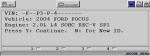
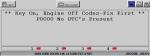
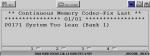
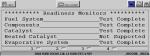
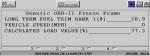
LTFT is probably gonna be super positive (+25) and the O2S is gonna be super low, as those can cause the P0171. How about a visual check of the exhaust manifold looking for a leak before the O2S? Maybe along the EGR system as well.
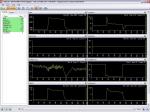
The consesus seems to be that you'd want to check scan data. Okay, done. This scan data was taken in the stall, no vehicle speed. Also: A visual inspection of the exhaust system before the oxygen sensor and of the EGR system reveals no abnormalities.
EDIT: It seems like this forum software shrinks the images to a point where the scan data may not be readable. I'll put the approximate values below in case they can't be read from the image.
u check for small vacum leaks(smoke) got any more pids? iac%
I didn't need any more PIDs than those shown. I like your thinking about vacuum leaks. Why did you say this? What in the data gave you that indication? If you were to smoke check this you would see no smoke. What next? Make sure you are specific. Details are the key to any diagnosis in the shop, regardless of the system or vehicle.
So far:
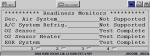
- Codes were pulled, monitors were checked
- Data at idle and 2500rpm was observed
- A visual inspection was performed on the EGR system and the exhaust system before the forward O2. (B1S1)
- A smoke check was performed through the intake and no smoke was observed.
the 160Hz baro reading says bad MAF (since this updates a baro reading from the MAF at wide open throttle & low RPM, i think). i think it should be lower, around 143Hz.
the 160Hz baro reading says bad MAF (since this updates a baro reading from the MAF at wide open throttle & low RPM, i think). i think it should be lower, around 143Hz.
161hz, or 30.1"hg is not an unusual reading to see in my shop. I found a good Baro chart online (http://www.geocities.com/ford.tech@sbcglobal.net/baro.htm) for future reference. 143hz would mean that the vehicle was somewhere between 5,000 and 6,000 feet. BARO on this vehicle is typically updated under moderate to high throttle conditions. One final note: If the BARO hz was too high it would likely have the opposite effect.
If you were to replace the MAF sensor on this vehicle you would have seen the same readings, post replacement, and the vehicle would not be fixed.
Typically a plugged exhaust would result in negative fuel trims. Also, you would likely see a lowered BARO reading, especially after driving at moderate to high throttle opening. As the engine can't breathe well, the MAF will calculate a lower and lower BARO. Remember: There was no driveability complaint.
A fuel filter could explain elevated fuel trims, except that the fuel trims balance out off idle. The engine would increasingly starve in regards to fuel as the demand (load) became greater -- so you'd likely see more and more of an effect off idle. In this case idle fuel trims are out of control, and off idle is normal. Lastly, a clogged/blocked fuel filter would likely result in a driveability complaint.
So, let's get back on course. What could cause your fuel trims to be so elevated at idle, but balance out off idle? What can have a significant effect when air flow through the engine is low, but disappear when air flow through the engine is increased?
I'll wrap this one up as nobody else seems to be taking any shots at it.
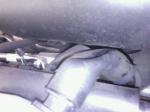
Yes, it was a vacuum leak, and a _very_ typical Ford one. The PCV breather tube elbow was soft and sucking in under engine vacuum. Sometimes it could be heard, other times not so much. A smoke check wouldn't reveal anything because the elbow would only suck in and cause a vacuum leak under the force of the vacuum leak. If you smoke checked the system and jiggled/moved stuff around you might find it. I've run into many truck engines that have this elbow at the rear of the engine, tucked under the cowling -- a smoke machine, vigerous shaking, and a mirror usually reveal it.
Many, many Ford PCV breather lines are subject to this kind of gummy deteroriation and can cause many odd vacuum leak issues. The best way to find this kind of failure is to use some scan data, and then go for a good "Hands On" under hood visual/wiggle test. As easy as it seems I have seen this kind of thing trip guys up hard.
I picked this one to go along with the theme of the very first one -- Basics, a visual, and hands on. A five minute diagnosis. This was a first time customer. We typically check for this kind of thing on all inspections as it is an easy sell for preventative maintenance.
02 voltage? last major service? where was smoke induced from/i.e IAT BUNG? air intake may be cracked after MAF before Throttle?
ford lean usually equals pcv or MAF
-- Edited by Negligent Op at 20:33, 2008-10-06
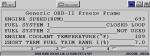
Shoot. You were posting this right as I was posting the conclusion. I didn't put up any freeze frame information because nobody asked. :) In any event, here it is.