OK, here's a simple one. Customer complaint: MIL on, runs good.
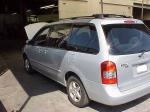
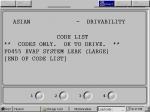
It's a 2000 Mazda MPV Van. I've attached 2 pics - a pic of the vehicle (which I always take) and in this case, a screen capture of the DTC that was set. My simple question whenever I do case studies in class (which I do a LOT of) is WWYD? What is your next step.
BTW, most pics are taken at my brothers' shop in Sunnyvale.
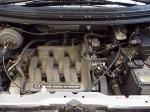
Unfortunately, all hoses were good, sealed and tight. Do you happen to know how this EVAP system monitor works? If not, no big deal. I will tell you that a good old fashioned visual inspection would have found this problem. Sometimes we all (me included) forget the basics. A visual inspection is one of the most powerful tools in your tool box and at times, will help you find the most illusive faults.
This one was a very good money maker as a good visual inspection assured that. It took all of about 15 minutes to scan the PCM, check the gas cap, lift the hood, open my eyes and order parts. Every one of you reading this could have diagnosed this failure in minutes.
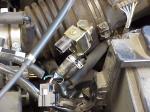
Now comes the fun part. Based on the pics, in typical Socrotes fashioin, I've got questions...
1. What component failed? 2. What does the failed component do? 3. What on earth does that component have to do with a leak? 4. Why did the PCM set a large leak DTC when there was no leak whatsoever? 5. How would you fix this car? 6. How would you bill the customer?
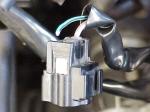
1. Looks to me like a connector of some kind lost a wire (the green one).
2. I have no clue as to it's actual description and/or true function, but I will take a guess and say that it electrically connects the EVAP system to the PCM.
3. If this component does not send the signal to the computer, the computer receives no information and the signal is pegged in one direction: thus resulting in the computer thinking there is a massive leak.
4. See #3. If the computer has no idea what the status of the EVAP system is, it goes to default or something.
5. I would get a new connector and run the wires back into the new one AFTER checking that the wires were actually good.
6. 1/2 hour diagnosis, 1/2 to 1 hour labor plus parts?
This is the best I can do with the limited knowledge I possess. One more thing... I feel silly asking this, and you can all make fun of me if you really want to, but what the heck does EVAP system stand for? What does it actually do? I gather it has to do with the fuel tank in some way, but I am not sure.
We didn't learn too much about these kinds of things in Dave's class, but i'll give it a try. My theory is based on me identifying the part correctly, so it will spiral downwards from there if I got that wrong.
1. The wire to the connector at the purge solenoid valve broke 2. The purge solenoid valve draws the vapor from the canister into the intake system 3/4. If the computer was unable to pull sufficient vacuum on the evap system due to a leak(or an inoperable solenoid in this case), it would set a dtc p0455 5. Inspect why the wire broke, and repair it by cutting off the old connector and splicing in a new one. Would probably reroute or lengthen the wire to avoid anything that it may have been tugging/rubbing on 6. .5 for diagnosis time and .5 for repair plus parts
First of all, I would never make fun of someone that asks a question or wants to learn. Ever. EVAP stands for the Fuel Evaporation System. Abbreviations are so prevalent in Engine Management Systems that last year Ryan Roche came up with hundreds of them that I used in class and put them in a spreadsheet affectionately called "The Jungle". You will get a copy of The Jungle the first week of class.
Back to your question regarding EVAP... In simple terms, it's a system that stores fuel vapors from the gas tank rather than release them to the atmosphere. Some older vehicles (like Jake's VDub) didn't have an EVAP System. The vapors are stored in a container called a Fuel Evaporative Canister. When the PCM deems the driving conditions appropriate, it will send a command to energize an EVAP Purge Solenoid which opens a valve that allows the engine to re-burn the stored vapors via the intake manifold. One side of the EVAP Purge Solenoid is connected to the EVAP canister and the other end of the solenoid is connected to the intake manifold for a manifold vacuum source to pull the stored vapors from the canister.
As far as the operation of the OBDII EVAP Monitor it's actually kinda cool. If you've ever used a hand operated vacuum pump, then you will understand how a PCM and it's EVAP monitor checks a system for vapor leaks. Simply put, the aforementioned EVAP Purge Solenoid receives a command from the PCM and pulls a SMALL (10"H2O, not "Hg) vacuum or low pressure on the fuel tank, EVAP canister and all associated hoses. It then monitors pressure loss via a Fuel Tank Pressure Sensor (FTP) over a period of time, then decides if there is a leak present. I intentionally left out one component called a EVAP Vent Solenoid. I have to leave you thinking about something. :---)
Back to the Mazda...
With a broken wire at the Purge Solenoid, obviously when the PCM commands the solenoid to pull a vacuum on the EVAP system, it can't. Unfortunately the PCM doesn't have a clue that the wire is broken so it assumes that if it can't pull a vacuum on the system, there must be a large leak.
I ordered a pigtail connector from Mazda (they had one in stock which tells me it's a common problem). It was then soldered on, DTC's cleared, then most importantly the EVAP monitor was run and verified that it passed before releasing it to the customer.
Here's how the R.O. looked so you get an idea how valuable your knowledge is:
Scan and check for DTC's. DTC P0455 present. Diagnosis: Found broken wire at Purge Solenoid causing P0455: 1.5HRS ($115.00 and hour at J&L Auto)
1 Purge solenoid connector (don't remember how much for the part)
Labor to solder and repair connector, clear DTC's and re-run EVAP monitor: 1.0HR
Shoot Chris, I wish that you had replied earlier - you could have saved me some time. I type slow :--)
My reply to your diagnosis is simple: Outstanding! We are going to have a fun year (or at least I am).
However, you and Tad are "giving" your labor/knowledge away.
Any check engine light at most shops (J&L Auto , my brothers' shop included) is a MINIMUM of 1.0HRS more commonly 1.5 HRS. That is just to diagnose. The labor to repair the problem is always, and I mean always a separate fee. Now if it's a friend or something, well that's different. When it comes to spending thousands on scan tools and updates every year, I have no friends.
Chris, great job and explanation. Wish you had done it earlier.
"Bump" for a new project? I never even got a chance to read this one and it's already solved. I'm not sayin I coulda done a better job, but it's slow at work and this woulda been a perfect problem to solve here. GREAT IDEA PETE!!!
Todd, what does "bump" for a new project mean? Does that mean do I have another case study to post? Dude I'm old and so not hip to the lingo. Thanks for the props on the Drive Corner - I think.
I have *gigs* worth of case studies, just say the word and I'll post more.
that's quick 1.5hrs love this idea though and eagerly waiting for more. (i totally got this before you answered by the way...) I like how you left the post open for a few days, too. classic pete.