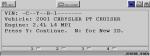
2001 Chrysler PT Cruiser 2.4L VIN B w/ MT. Customer complaint that the engine started a little rough, idled somewhat roughly, and drove mostly OK. The MIL was not illuminated on this vehicle.
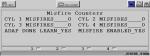
To start things off I checked the monitors, they were all completed. No codes were set in enhanced or generic. I checked for misfires during the rough idle using the misfire counter. None. The adaptive was learned and misfire detection was enabled. I took the vehicle for a test drive and saved the scan data.
What would you do next? If you want to see data then be specific with what kind of data you woul look at. The enhanced data stream has easily over 100 PIDs.
pull spark plug wires and check for carbon tracking around the spark plug ends sometimes hard to see, much more visible on the ceramic of the spark plug.
Are you familiar with the particular setup of this engine configuration? Pulling the plugs and wires generally requires removal of the intake. This is the same engine they put in the Neon, so it has the little wires and the DIS coil, but there is a big UFO shaped intake manifold over top of the entire thing.
You would be very disappointed to find that the spark plugs and spark plug wires are without issue. It has been my experience that if secondary ignition components were the issue not only would you find the misfire counters increasing but it generally would get worse under load.
first you can remove the upper to lower intake manifold bolts and prop up the intake enough to remove plugs in no time second i have seen many rough running pt's no misfires, no problems off idle or under load. third what is your cust deff of rough idle, most pt's i have come across have a slightly rough idle but i am interested by "drove mostly ok" as far as checking next go look at LTFT for all memory cells
Indeed.
The engine starts roughly and runs rough at idle. Enough so that the customer has decided to bring the vehicle to my shop for diagnosis and repair. I would certainly agree with the customer's ascertation.
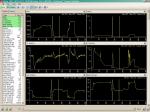
Would some scan data of a test drive suffice? I happen to have just that. You may need to save the file and zoom in to read the graphs. For some reason this forum software seems to enjoy shrinking these images.
saddly i can not get you image to be large eough to be usefull but if the problem is just at idle i would get out the carb spray and start with the intake manifold to cyl head area around the #1 cyl
thisisunsane wrote: Would some scan data of a test drive suffice? I happen to have just that. You may need to save the file and zoom in to read the graphs. For some reason this forum software seems to enjoy shrinking these images.
you're probably better off hosting the images on photobucket.com or similar website and using the [ url ] address [ /url ] (sans spaces) code since this forum destroys the original image.
by the way, i'm interested in the scan data as well.
saddly i can not get you image to be large eough to be usefull but if the problem is just at idle i would get out the carb spray and start with the intake manifold to cyl head area around the #1 cyl
Spraying carb spray around the intake manifold gasket around cylinder #1 would have no effect. Spraying it around the rest of the gasket would also have no effect, except to maybe burn your eyes.
thisisunsane wrote: Would some scan data of a test drive suffice? I happen to have just that. You may need to save the file and zoom in to read the graphs. For some reason this forum software seems to enjoy shrinking these images.
you're probably better off hosting the images on photobucket.com or similar website and using the [ url ] address [ /url ] (sans spaces) code since this forum destroys the original image.
by the way, i'm interested in the scan data as well.
Vacuum controlled EGR valve with a backpressure transducer, and there was no EGR position PID because there is no pintle position sensor. The PCM is going to measure flow indirectly, and unless I'm mistaken it is via fuel trim changes.
5 wire egr i suspect, although you dont need to see it to diag, it would be interesting to see egr pos
I didn't have access to my information system from home. I snagged a screen shot which explains how a P0401 -- the only EGR activity/flow related code this PCM is capable of setting -- works. The PCM is looking for changes in the oxygen sensor. This PCM is not capable of determing what the present flow is, only if there is enough of a change in exhaust content during vacuum solenoid command. A disappointingly rudimentary method. It does a P0403 but that is for the vacuum solenoid circuit itself.
that's a lot better, yeah. things that stick out in my mind are the 0.2V O2 with no throttle and ~13" of manvac. how does driveability change when manually opening the EGR valve with a vac pump? seems like the EGR could be stuck slightly open...
The engine will definitly stumble and run worse with more EGR application. If you were to disconnect the vacuum line at the EGR and hook your vacuum pump up there you would, indeed, notice the EGR was hot as hell. If you applied vacuum you would notice that the diaphragm moves up and down but does not quite always seat.
One of the problems with the way this engine management system watches EGR flow is that is unable to determine that the EGR valve isn't closed all the way. It watches for changes -- and since the diaphragm does indeed move when commanded, it didn't feel there was an issue.
Here's the funny thing. Let's go ahead and warp ahead: You replace the EGR valve like a hero. Problem is: Fuel trims are better and engine performance is better, but the idle is still a bit off and the scan data indicates a slightly low engine vacuum and unusually negative fuel trims at idle. Off idle the fuel trims are balanced and engine vacuum numbers make sense. You aren't done.
sounds like some speed density issues or a lazy o2, sure you didnt break any vac lines while pulling the egr out, or did the egr melt any vac lines, plastic is such a stupid idea, especially in hot places.
yes it is possible to change spark plus on a pt by just raising the plenum , take the front 5 or whatever bolts off and use a bungie cord to hold it up.
i like kahlil's idea of the lazy O2, whats it's sig look like? also, was the heat from a constant open EGR enough to destroy the back pressure transducer?
sounds like some speed density issues or a lazy o2, sure you didnt break any vac lines while pulling the egr out, or did the egr melt any vac lines, plastic is such a stupid idea, especially in hot places.
yes it is possible to change spark plus on a pt by just raising the plenum , take the front 5 or whatever bolts off and use a bungie cord to hold it up.
Sure, it's possible. It's just too much effort and a waste of time in this case. :) I like to do as much of my diagnosis as I can while sitting in the front seat, sipping my coffee. With no indication of an ignition misfire, and indications of low manifold vacuum I wouldn't have bothered going after the spark plugs.
But that's just me. That's just how I do things.
You are on to something when you talk about melted plastic. No, the EGR lines and backpressure transducer wasn't damaged or melted. See my below response.
i like kahlil's idea of the lazy O2, whats it's sig look like? also, was the heat from a constant open EGR enough to destroy the back pressure transducer?
You and Negligant Op are on the right track.
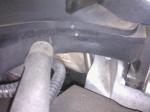
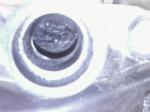
The intake manifold was melted on the inside and it had caused three little holes, causing a vacuum leak. I've included two pictures to show the damage.
All in all it was a very easy diagnosis and a very profitable series of repairs.